

Why Your Cat Ignores That Expensive Water Bowl (And What It Says About Trust)
You spent good money on that ceramic water bowl. You fill it fresh every morning. You placed it in the perfect spot. Yet your cat walks right past it, leaps onto the bathroom counter, and meows at the faucet like their life depends on it.
What gives?
Here's the thing: your cat isn't being stubborn or ungrateful. They're not rejecting you or your gift. That expensive bowl? It's triggering every survival instinct your cat inherited from their wild ancestors. And understanding why reveals something fascinating about how cats perceive safety, trust, and their place in your home.
The Ancient Instinct Your Cat Can't Ignore
Imagine you're hiking in the wilderness. You come across two water sources: a crystal-clear stream bubbling over rocks, and a still pond covered in a thin film with mosquitoes hovering above. Which one would you trust?
Your cat makes the same calculation every single day.
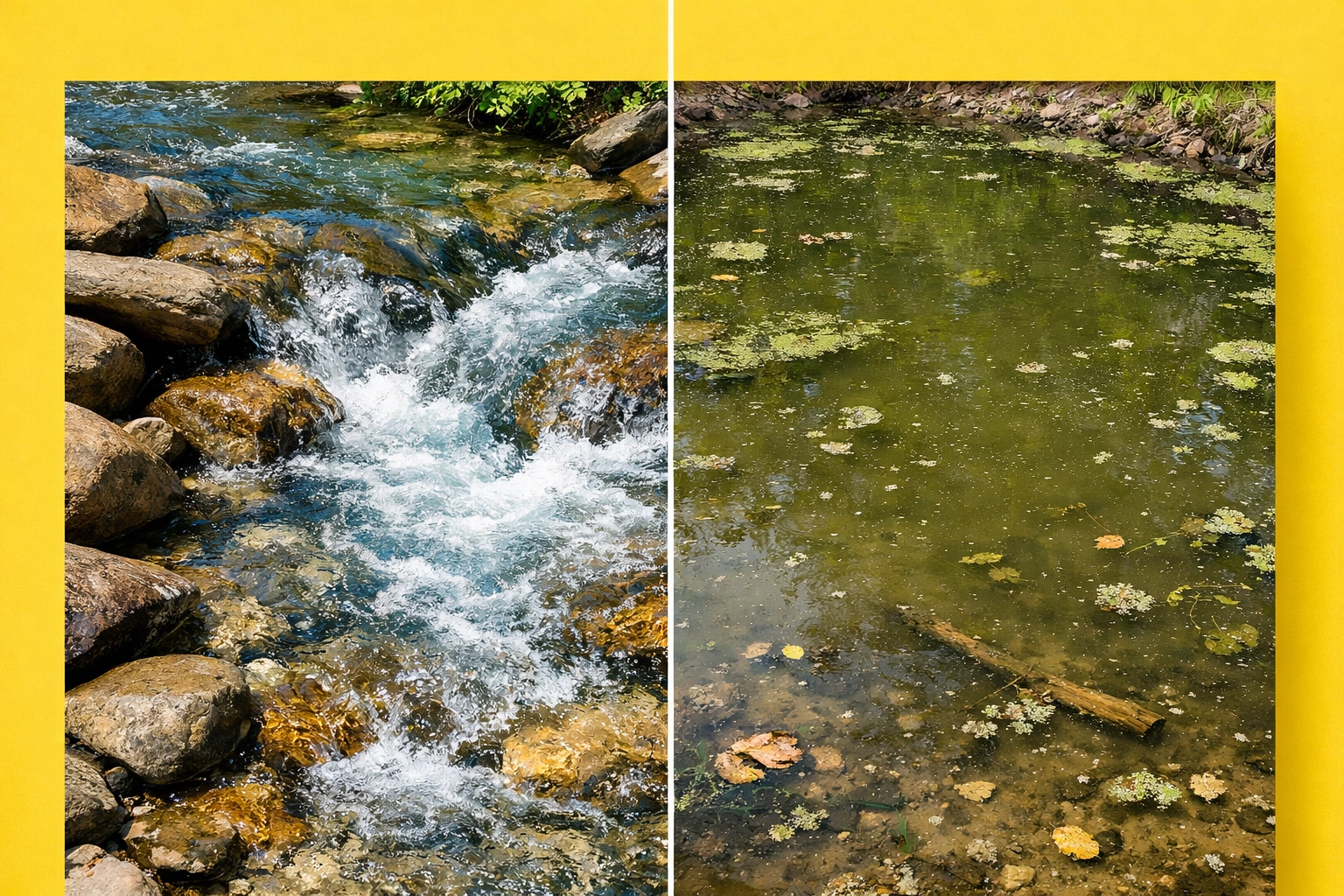
In the wild, stagnant water is dangerous. It harbors bacteria, parasites, and all sorts of nasty surprises that moving water naturally filters out. Streams and flowing water are oxygenated, fresher, and far less likely to make a cat sick. This isn't something cats learn, it's hardwired into their DNA after thousands of generations.
That beautiful still bowl of water? To your cat's ancient brain, it looks questionable. Potentially contaminated. Maybe even dangerous.
Even though you know it's fresh tap water you just poured five minutes ago, your cat doesn't have that context. They're operating on instinct, and that instinct screams: "Moving water equals safe water."
This is exactly why so many cats prefer drinking from faucets, fountains, or even puddles after a rainstorm. The movement signals safety to them. It's not about the bowl being expensive or inexpensive, it's about the water being still.
The Vulnerability Problem: Why Location Matters
Here's where things get really interesting, and where trust comes into play.
When your cat drinks from a floor-level bowl, they're in one of the most vulnerable positions possible. Their head is down, their back is exposed, their peripheral vision is limited, and their escape routes are compromised.
Think about it from their perspective: they're a small predator who's also potential prey. In nature, drinking time is danger time. Predators know that animals must drink, so water sources become hunting grounds. Your cat knows this on a cellular level.
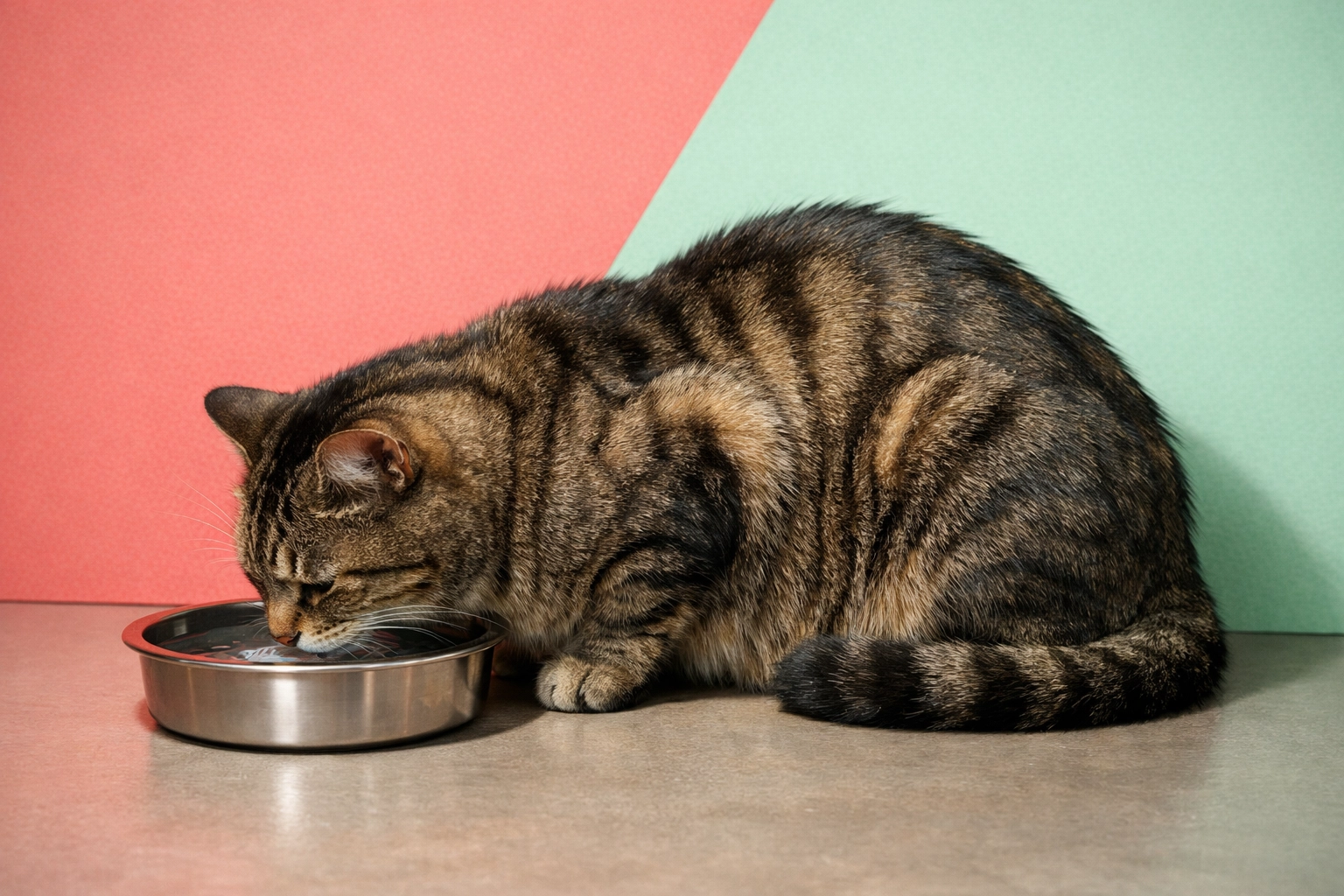
Now imagine being told to eat your lunch in a dark alley while crouched in a corner, facing the wall. You might be hungry, but you'd probably find somewhere else to eat, right?
That's your cat with the floor bowl.
This is also why many cats prefer elevated surfaces or sinks for drinking. When they're higher up, they have:
- A better view of their surroundings
- Protection for their back (usually against a wall)
- Multiple escape routes
- The psychological advantage of height
In multi-cat homes, this vulnerability factor becomes even more critical. If you have a dominant cat who controls access to resources, a subordinate cat might avoid the water bowl entirely: not because they aren't thirsty, but because approaching it feels too risky. They're likely finding alternative sources when the coast is clear.
Similar to how cats need a clean, safe litter box space that respects their territorial instincts, they need drinking areas where they feel secure and in control.
The Sensory Nightmare of Wrong Bowls
Let's talk about what your cat experiences when they approach that bowl: assuming they even want to.
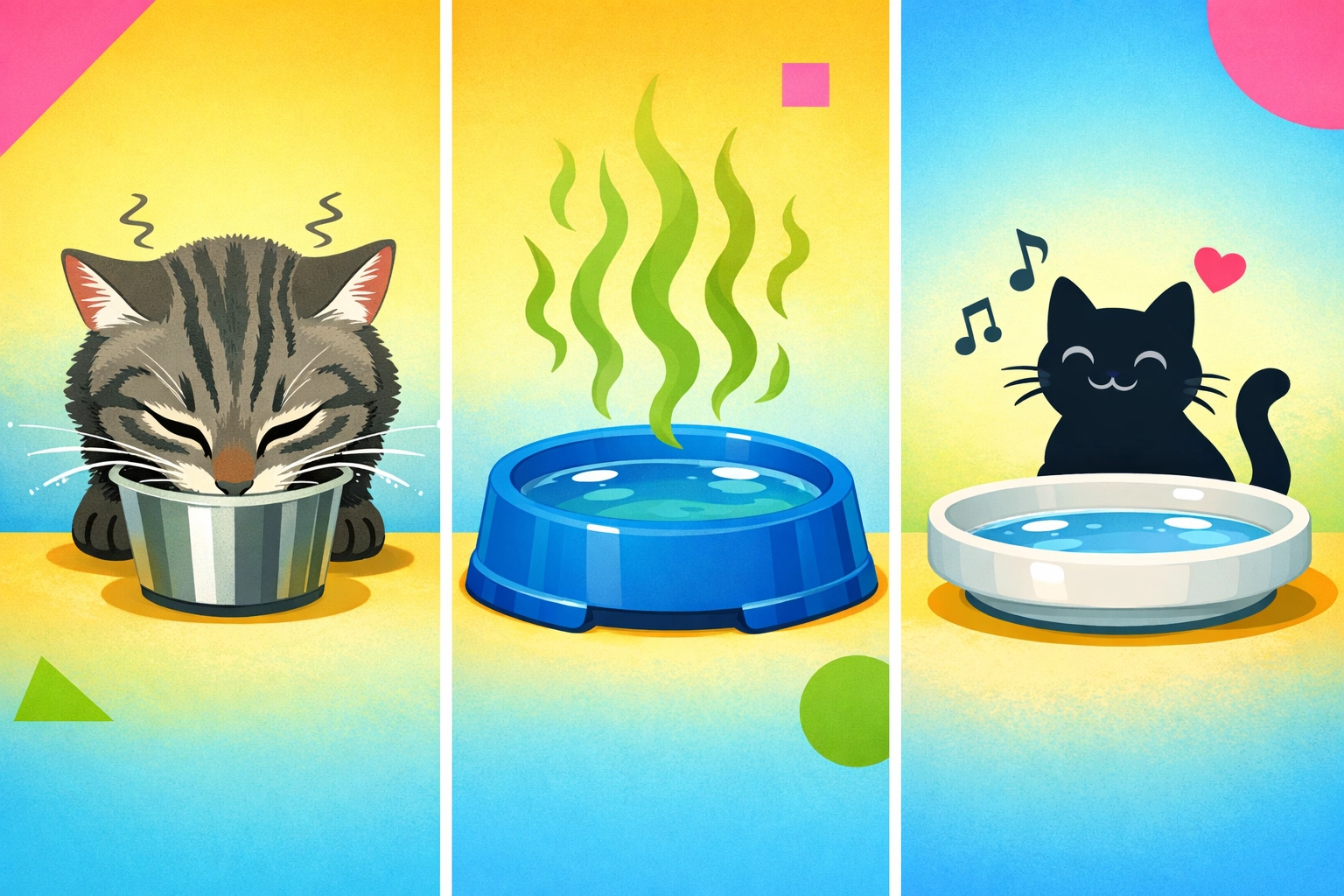
Whisker fatigue is real. Cats have incredibly sensitive whiskers that act as sophisticated sensory tools. When they're forced to stick their face into a deep, narrow bowl, those whiskers bend and press against the sides with every lick. It's uncomfortable, overstimulating, and genuinely unpleasant.
Imagine wearing a too-tight hat that presses on your temples all day. You'd take it off, right? Your cat's whiskers send constant signals to their brain, and when those signals are "compressed, touching, uncomfortable," your cat will find another way.
Then there's the material issue.
Plastic bowls are odor magnets. They absorb and retain smells from previous water, food particles, bacteria, and even dish soap. Your nose might not pick it up, but your cat's definitely does. To them, that water doesn't smell or taste fresh: it smells like everything that bowl has ever held.
Stainless steel or ceramic works better, but only if the bowl is:
- Wide and shallow (protecting those whiskers)
- Actually clean (not just rinsed)
- Placed somewhere that feels safe
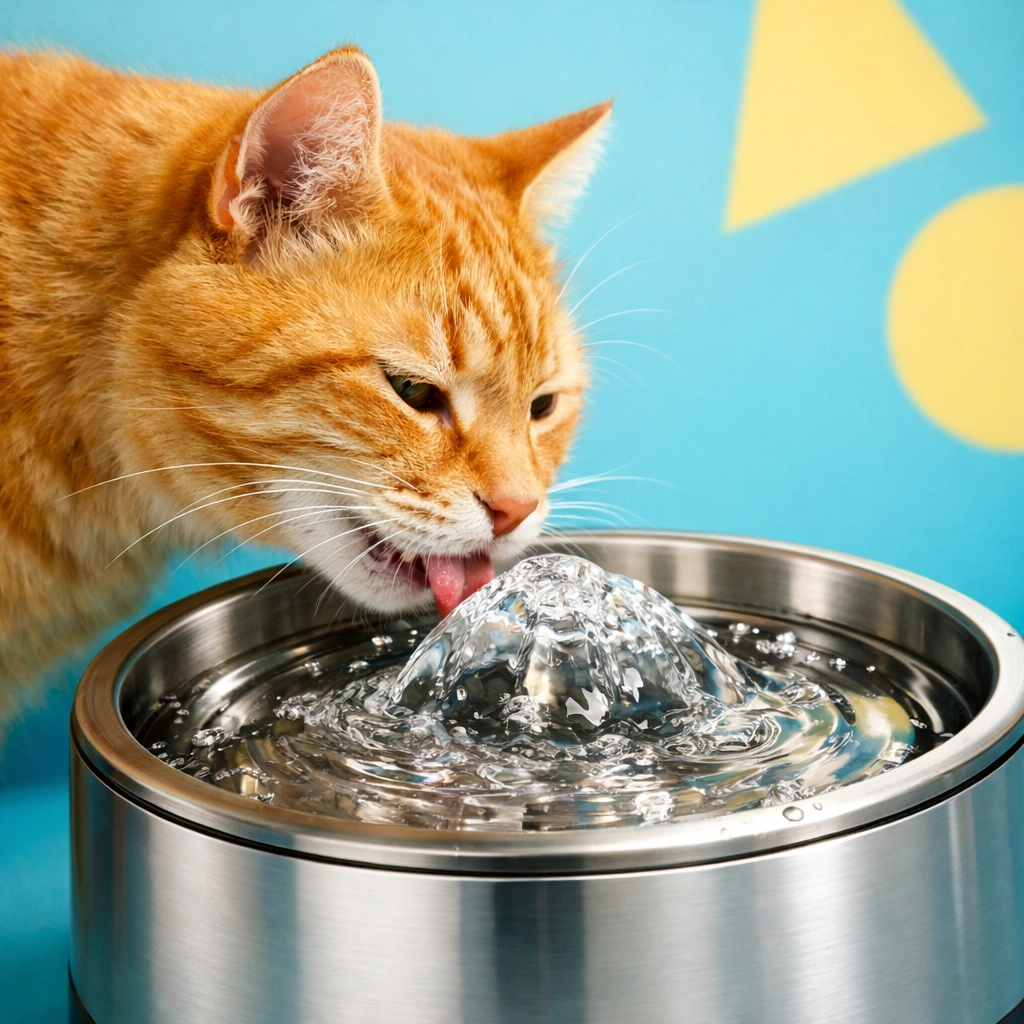
And here's something many people miss: cats can hear things you can't. They use their exceptional hearing to locate water sources in nature. A silent bowl doesn't register as a water source the way a dripping faucet or bubbling fountain does. The sound of moving water literally tells them, "Safe, fresh drinking water here."
What This Actually Says About Trust
Now we get to the heart of it: Does your cat's bowl behavior mean they don't trust you?
Not at all.
Your cat absolutely trusts you. They sleep near you, bring you their vulnerable belly, slow-blink at you, and follow you around. That's trust.
What they don't trust is the environmental setup that conflicts with their survival instincts. It's not personal: it's biological.
When your cat bypasses the bowl for the faucet, they're saying: "I trust that you'll turn on the faucet for me because I've taught you this is where I feel safe drinking." They've actually trained you to provide water in the way that matches their instincts.
That's not distrust: that's effective communication from a creature who can't use words.
The real breakthrough comes when you understand that meeting your cat where their instincts are isn't spoiling them or giving in. It's respecting their nature and creating an environment where they can thrive without constantly fighting their own biology.
Creating a Water Setup Your Cat Will Actually Use
So what's the solution? You don't have to become a faucet-turning servant for life.
Consider a cat water fountain. These address nearly every instinctual concern:
- Moving water signals freshness and safety
- The sound helps cats locate the water source
- Many are elevated or can be placed at comfortable heights
- The circulation keeps water oxygenated and filtered
- Wide drinking surfaces protect whiskers
When choosing the best cat water fountain for your home, look for:
- Stainless steel or ceramic construction (no plastic)
- Multiple drinking levels or surfaces
- Quiet pump operation (loud pumps defeat the purpose)
- Easy-to-clean design with dishwasher-safe parts
- Adequate capacity for your household
You don't need the most expensive option. You need one that's quiet, clean, and made of appropriate materials.
Also consider multiple water stations. Just like you might prefer different seating spots throughout your home depending on your mood, your cat likes options. Place shallow bowls or fountains in various locations:
- One in a quiet, protected corner
- One in a more social area
- One elevated if possible
- Never right next to the litter box (would you want your drink next to your toilet?)
The Bottom Line
Your cat isn't ignoring that expensive water bowl because they're difficult, picky, or untrusting. They're responding to thousands of years of evolutionary programming that kept their ancestors alive.
Still water looks risky. Vulnerable positions feel dangerous. Uncomfortable bowls cause sensory overload. These aren't preferences: they're instincts.
When you provide moving water in a safe location with appropriate bowl dimensions, you're not indulging your cat. You're speaking their language. You're saying: "I see you, I understand what makes you feel secure, and I'm creating a space that honors your nature."
That's not about the cat trusting you more. That's about you trusting that your cat's instincts exist for good reasons, and working with them instead of against them.
The faucet thing? That might continue. But at least now you understand what your cat is really saying when they paw at the sink: "This is where the safe water lives. Can you help?"
And isn't that what trust really looks like: knowing someone will help you access what you need to feel safe?